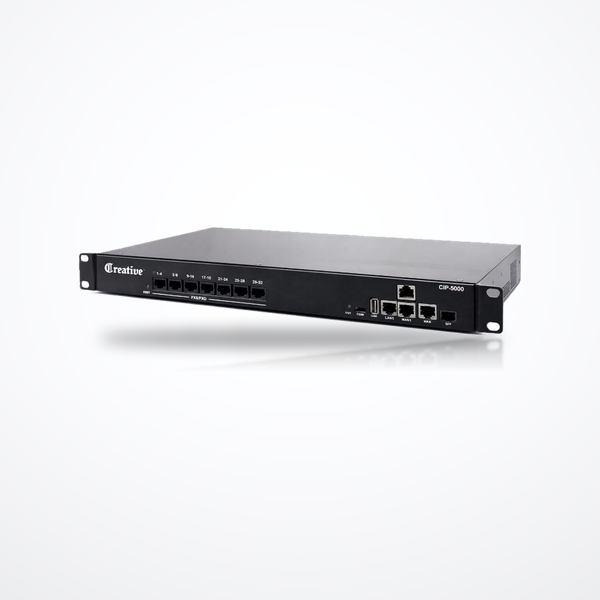
CIP-5000 Gateway
CIP-5000 Series FXS-FXO VoIP Media Gateway (NMG 048) lets businesses and service providers connect legacy analog devices to modern IP-based telecommunication systems.
Cost Efficiency
By leveraging existing analog devices, migrate to VoIP networks without the need for expensive equipment upgrades.
Seamless Integration
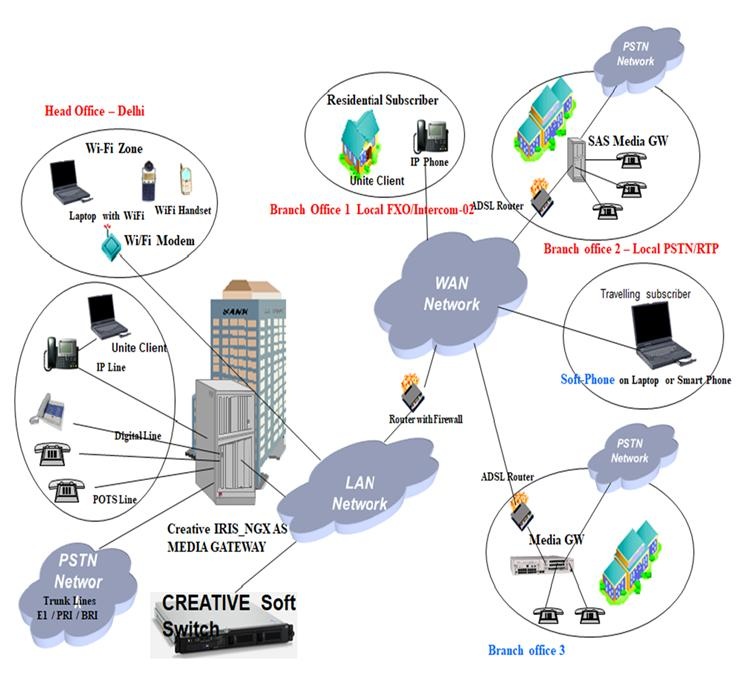
The CIP-5000 Series Media Gateway facilitates the integration of legacy analog devices with modern IP-based telecommunication systems, ensuring interoperability and continuity of service.
Flexibility and Scalability
FXS-FXO gateways come in various port combinations, allowing businesses to scale their telecommunication infrastructure according to their requirement.
Enhanced Productivity
Advanced call management features improve productivity by enabling efficient call routing and handling.
Reliability
Built-in failover mechanisms ensure uninterrupted communication even in the event of network failures or outages.
Simplified Management
Intuitive management interfaces streamline configuration, monitoring and troubleshooting tasks, reducing the burden on IT staff.
Applications
- VoIP Service Providers: ISP/ITSPs can offer VoIP services to customers with existing analog equipment, expanding their market reach
- Remote/Branch Offices: integrate analog phones, fax machines and other devices into IP-based telephony systems and connect branch offices to the central VoIP network
- Legacy System Integration: industries such as healthcare and hospitality can modernize their infrastructure gradually without disrupting existing operations
Port Configurations (Ethernet: 4 LAN/WAN, SFP 1x1G)
| Configuration | FXO | FXS | Interface |
|---|---|---|---|
| 08 FXS | -- | 08 | RJ45 |
| 16 FXS | -- | 16 | RJ45 |
| 24 FXS | -- | 24 | RJ45 |
| 32 FXS | -- | 32 | RJ45 |
| 04 FXO 04 FXS | 04 | 04 | RJ45 |
| 04 FXO 12 FXS | 04 | 12 | RJ45 |
| 04 FXO 20 FXS | 04 | 20 | RJ45 |
| 04 FXO 28 FXS | 04 | 28 | RJ45 |
| 08 FXO | 08 | -- | RJ45 |
| 08 FXO 08 FXS | 08 | 08 | RJ45 |
| 08 FXO 16 FXS | 08 | 16 | RJ45 |
| 08 FXO 24 FXS | 08 | 24 | RJ45 |
| 16 FXO | 16 | -- | RJ45 |
| 16 FXO 08 FXS | 16 | 08 | RJ45 |
| 16 FXO 16 FXS | 16 | 16 | RJ45 |
| 32 FXO | 32 | -- | RJ45 |
Specifications
| FXS | Caller ID: DTMF/FSK, DTMF/PULSE, CLI Presentation; Cable Length: 2-5KM; Reversed Polarity; Color Ring-back Tone; Hotline; T.38 Fax; Tx-Rx Gain; Loop Impedance 600 Ohm; Hook Flash Detection; MWI |
|---|---|
| FXO | Caller ID - Before Ring, Polarity Reversal, after ring Signaling - FXS, DTMF Tx Gain, Rx Gain, Port Group Busy Tone |
| Telephony Features | Speed Dial, Self-survival, Blind Transfer, Attended Transfer, Three-way Calling, In/Out call Route, Call Hold, CDR, Custom MOH, Time Profile etc. |
| Protocol | SIP V2 (RFC 3261, 3262, 3263, 3264), Session Timer (RFC4028), SDP (RFC2327), STUN (RFC 3489), RTP/RTCP (RFC1889 and RFC 1890), SIP URI Lookup (RFC2915), ARP/RARP (RFC 826/903), SNTP (RFC 2030), DNS/DNS SRV (RFC1706 & RFC2782), NAT/NAPT Router function, DTMF (RFC 2833) In-band/out band, SIP INFO/NOTIFY, SIP proxy redundancy |
| Audio Codecs | G.711A/U law, G.729A/B, AMR, G.726, iLBC, G.723, Opus, G.722; Silence Suppression, Comfort Noise Generation (CNG), Voice Activity Detection (VAD), Echo Cancellation (G.168) with up to 128ms, Adaptive Jitter Buffer, Programmable Gain Control, T.38/Pass-through |
| Networking | IPv4/IPv6, UDP, TCP, DHCP Client Static/Dynamic IP, DHCP Server, FTP, TFTP, PPPoE, ARP, RARP, NAT, Ping, NTP, SNTP, HTTP/HTTPS, ICMP, OpenVPN, N2N-V2 VPN, 802.1p/Q, SSH, DNS, VLAN, Telnet, IP conflict detection |
| Debug / Troubleshooting | Port Monitor, Ethernet Capture, Ping, Tracert, NS lookup, Pcap, system log, network monitor |
| Security | SRTP, Firewall ACL, TLS, NAT, Ping block, HTTPS, QOS, SIP auto defense, Web auto defense, Open VPN, N2N VPN |
| Management | Firmware Backup-Restore, Web Management Interface, IVR-driven Feature codes, SNTP Time Synchronization, System Log |
| Power | 230V AC, 48V DC |
| Temperature | Operation: 0~60 °C; Storage: -20~80 °C |
| Relative Humidity | 10%~90% non-condensing |
